
💰 Scenario 6

Understanding Your First Payslip in Australia

Receiving your first salary in Australia can be exciting, but understanding your payslip is just as important. Today you'll learn how Australian workers get paid, how to read a payslip, and how to speak confidently with Payroll.

🎯 Level

Beginner – Intermediate

⏱ Time

60–90 Minutes

🇦🇺 Topic

Payroll & Salary

🎥 Lesson

Real Australian Video

🎯 Today's Mission

💵

Understand Salary

Learn how Australian workers are paid.

📄

Read a Payslip

Understand every section of an Australian payslip.

🏦

Payroll English

Learn important workplace vocabulary.

💬

Speak Confidently

Ask Payroll questions naturally.

🧠 Before Watching

Discuss these questions with your teacher.

1️⃣

How are workers paid in Vietnam?

2️⃣

Have you ever received a payslip?

3️⃣

Do you usually check your salary?

4️⃣

What happens if your salary is wrong?

🎥 Watch the Lesson

Watch the video once. Don't worry if you don't understand everything. Just listen.

🎯 Listen for these words

Salary Payslip Gross Pay Net Pay Tax Payroll Superannuation Deduction

📝 My Video Notes

New Word #1

_____________________________________
New Word #2

_____________________________________
Something I didn't understand

_____________________________________

_____________________________________
One question for my teacher

_____________________________________

_____________________________________

📚 Payroll Vocabulary

Let's learn the most common words used in Australian workplaces.

🎥 Heard in Video
Salary

💵 Salary

/ˈsæl.əri/

A fixed amount of money paid regularly by your employer.

"My salary is paid every fortnight."

salary increase salary payment monthly salary
🎥 Heard in Video
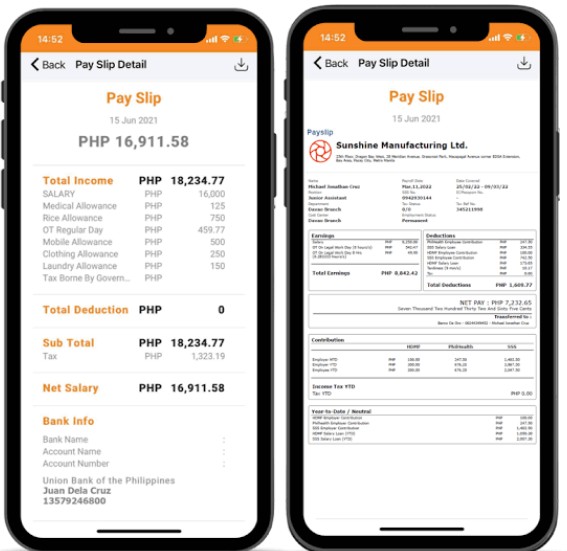
Payslip

📄 Payslip

/ˈpeɪ.slɪp/

A document showing your earnings and deductions.

"I checked my payslip yesterday."

electronic payslip weekly payslip download payslip

Payroll

🏢 Payroll

/ˈpeɪ.rəʊl/

The department responsible for paying employees.

"Please contact Payroll."

payroll officer payroll system payroll department
🎥 Heard in Video
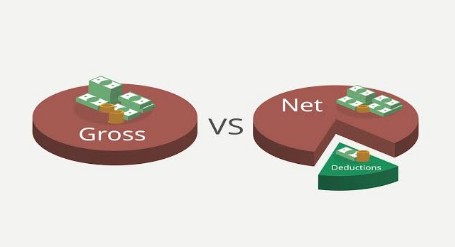
Gross Pay

💰 Gross Pay

/ɡrəʊs peɪ/

Your pay before tax and deductions.

"My gross pay was $1,250."

gross income gross earnings
🎥 Heard in Video
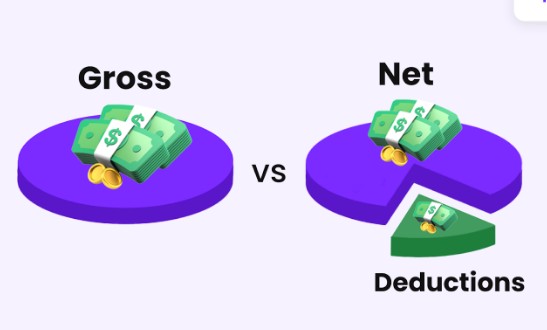
Net Pay

🏦 Net Pay

/net peɪ/

The money deposited into your bank account.

"My net pay is lower than my gross pay."

take-home pay net salary
🎥 Heard in Video
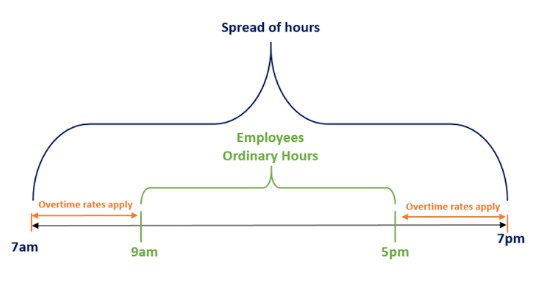
Ordinary Pay

💼 Ordinary Pay

/ˈɔː.dɪ.nər.i peɪ/

The money you earn for your normal working hours before overtime or penalty rates are added.

"I worked 38 ordinary hours this week."

ordinary pay ordinary hours ordinary hourly rate

🗣️ Make Your Own Sentence

  • My ordinary pay is __________.
  • I worked ______ ordinary hours this week.
  • My ordinary hourly rate is __________.

Tax

🧾 Tax

/tæks/

Money deducted and paid to the government.

"Tax is automatically deducted."

income tax tax deduction

Super

🏖 Superannuation

/ˌsuː.pər.æn.juˈeɪ.ʃən/

Money saved for your retirement.

"My employer pays super."

super fund super payment
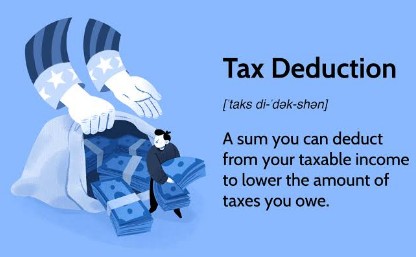
Deduction

➖ Deduction

/dɪˈdʌk.ʃən/

Money taken away from your pay.

"There are several deductions."

tax deduction salary deduction
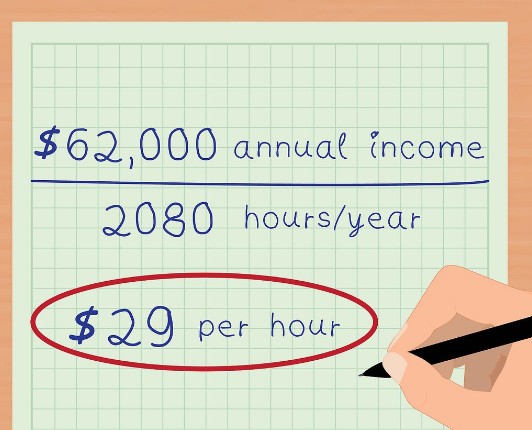
Hourly Rate

⏰ Hourly Rate

/ˈaʊə.li reɪt/

How much you earn per hour.

"My hourly rate is $31."

hourly wage base rate

Overtime

⏳ Overtime

/ˈəʊ.və.taɪm/

Extra hours worked beyond normal hours.

"I worked four hours of overtime."

overtime pay work overtime

Allowance

💳 Allowance

/əˈlaʊ.əns/

Extra money paid for certain work conditions.

"I receive a cold room allowance."

Payday

📅 Payday

/ˈpeɪ.deɪ/

The day employees receive their wages.

"Friday is payday."

👀 While Watching

Watch the video again. Try to answer each question before revealing the answer.

Question 1: What is Gross Pay?

Gross Pay is the total amount of money you earn before tax, superannuation, or any other deductions are taken out.

Question 2: What is Net Pay?

Net Pay is the amount of money that is deposited into your bank account after tax and other deductions have been taken out.

Question 3: Why is tax deducted?

Employers deduct PAYG (Pay As You Go) tax from your wages and send it to the Australian Taxation Office (ATO) on your behalf.

Question 4: What is Superannuation?

Superannuation is money your employer contributes to your retirement savings fund. It helps support you financially after you retire.

Question 5: Why should workers always check their payslip?

Workers should check their payslip to make sure their hours, pay rate, overtime, deductions, and net pay are all correct.

Question 6: Write three new words you heard.

Example answers:

  • Gross Pay
  • Penalty Rate
  • Superannuation

🇦🇺 How Payroll Works in Australia

👨‍💼 Employer
⬇
💻 Payroll
⬇
🧾 Tax & Super
⬇
🏦 Bank Deposit
⬇
😊 You Receive Your Salary

Every payday, your employer calculates your wages, deducts tax, pays your superannuation, and transfers your net pay into your bank account.

🥩 Workplace Reality

Imagine this...

You have just started working at ABC Meat Processing in Australia.

It's your second Friday. Everyone is excited because today is payday.

Your supervisor says,

"Payroll has processed everyone's wages."

You open your banking app...

😟 Your salary hasn't arrived.

Would you know what to say? By the end of today's lesson, you will.

📄 Sample Australian Payslip

Below is an example payslip from a meat processing company. Study the information carefully.

ABC Meat Processing Pty Ltd

Employee Payslip

Employee Nguyen Thi
Employee ID MP24815
Pay Period 1 July – 14 July
Pay Date 15 July
Hours Worked 38 Hours
Hourly Rate $31.20
Gross Pay $1,185.60
Tax Deducted -$176.40
Superannuation $136.34
Net Pay $1,009.20

🔍 Understand Your Payslip

Question 1

Who is the employee?

_________________________________

Question 2

How many hours did the employee work?

_________________________________

Question 3

What is the hourly rate?

_________________________________

Question 4

How much is the gross pay?

_________________________________

Question 5

How much tax was deducted?

_________________________________

Question 6

How much money was deposited into the bank account?

_________________________________

💬 Say It in English

Read the Vietnamese sentence first. Try to say it in English before clicking to reveal the answer.

💰 Tôi vẫn chưa nhận được lương.

I haven't received my salary yet.

📄 Bạn có thể giải thích phiếu lương của tôi không?

Could you explain my payslip?

❓ Tại sao lương thực nhận của tôi lại thấp hơn?

Why is my net pay lower?

🧾 Bạn có thể kiểm tra thông tin bảng lương của tôi không?

Can you check my payroll details?

✅ Tôi đã được trả lương đúng chưa?

Have I been paid correctly?

🏦 Khi nào lương của tôi sẽ vào tài khoản?

When will my salary arrive?

📞 Tôi cần nói chuyện với bộ phận Payroll.

I need to speak with Payroll.

💳 Tôi vừa đổi tài khoản ngân hàng.

I've changed my bank account details.

🔄 Tôi cần cập nhật thông tin ngân hàng của mình.

I need to update my bank details.

📅 Bao giờ là ngày trả lương?

When is payday?

🕒 Tôi nghĩ số giờ làm của tôi không đúng.

I think my hours are incorrect.

⏳ Tôi nghĩ tiền làm thêm giờ của tôi bị thiếu.

I think my overtime pay is missing.

🔍 Real-Life Research Challenge — Find Your Award

Imagine today is your first week working at an Australian meat processing factory. Your supervisor says,

"You're covered by an Award. Please make sure you understand your pay."

Your mission is to research your employment conditions using official Australian websites. Do not reveal the answer until you have searched for it yourself. After completing each task, explain your answer to your teacher in English.

🥩 Task 1 — Which Award Covers Your Job?

Find the Award that covers meat processing workers in Australia.

💡 Need a Hint?

Search Google: Fair Work Meat Industry Award

✅ Reveal Answer

The correct Award is the Meat Industry Award (MA000059). It covers many employees working in abattoirs, boning rooms, meat processing plants and packing operations.

💰 Task 2 — Find the Current Hourly Rate

Find the minimum hourly pay for a Level 1 employee.

💡 Need a Hint?

Open the latest Fair Work Pay Guide and find: Level 1 — Ordinary Hourly Rate

✅ Reveal Answer

There isn't one fixed answer. The hourly rate changes every year. Always use the latest Fair Work Pay Guide.

⏰ Task 3 — When Do Overtime Rates Apply?

Research how overtime is paid.

💡 Need a Hint?

Search inside the Award for: Overtime Look for:

  • Time and a half
  • Double time

✅ Reveal Answer

Employees are usually paid a higher rate for overtime. Common overtime rates include:

  • Time and a half (1.5×)
  • Double time (2×)
The exact rules depend on the Award and when the overtime is worked.

📅 Task 4 — Sunday & Public Holiday Pay

Find the penalty rate for working on Sundays.

💡 Need a Hint?

Open the Pay Guide. Look under Penalty Rates.

✅ Reveal Answer

Sunday work is usually paid at a higher penalty rate than ordinary hours. The exact percentage depends on your Award and employee classification. Always check the latest Pay Guide.

❄ Task 5 — Find One Allowance

Research one allowance that meat workers may receive.

💡 Need a Hint?

Search the Award for Allowances. Examples include:

  • Cold work allowance
  • Leading hand allowance
  • First aid allowance
  • Protective clothing allowance

✅ Reveal Answer

Possible answers include:

  • Cold work allowance
  • Leading hand allowance
  • First aid allowance
  • Protective clothing allowance
Allowance amounts are updated regularly.

🧾 Task 6 — What Does PAYG Mean?

Research PAYG using the Australian Taxation Office website.

💡 Need a Hint?

Search: ATO PAYG meaning

✅ Reveal Answer

PAYG means Pay As You Go. It is income tax that your employer deducts from your wages and sends to the Australian Taxation Office (ATO).

🏖 Task 7 — What Is Superannuation?

Research what Superannuation is and who pays it.

💡 Need a Hint?

Search: ATO Superannuation

✅ Reveal Answer

Superannuation is money that your employer contributes to your retirement savings fund. It is generally paid in addition to your ordinary wages.

⭐ Final Challenge

Find one interesting fact about the Meat Industry Award that we did not learn in today's lesson. Be ready to explain it to your teacher in English.

After the Lesson — IELTS Speaking Practice

Part 1 — Introduction and Interview

(4–5 mins)

Answer template

Answer directly → explain → give a personal example.

Yes, I do. / No, I don't. Usually, I ______ because ______. For example, when I ______, I realised ______. Overall, I think ______ because ______.

  • Do you usually check your payslip after you get paid?

    Yes, I do. I always check my payslip to make sure my salary and working hours are correct.

  • Do you think it is important to understand your salary?

    Yes. If you understand your salary, you can check whether you have been paid correctly.

  • Would you ask your employer if you didn't understand your payslip?

    Yes, I would. I think it is better to ask questions than to make incorrect assumptions.

Part 2 — Cue Card

(1 minute preparation · 1–2 minutes speaking)

Describe a time when you received your salary or learned something about a payslip.

  • where you were working
  • how you were paid
  • what you learned
  • and explain why the experience was important.
Answer template

I'd like to talk about a time when ______. At that time, I was working as ______. I received my salary by ______. While checking my payslip, I noticed ______. After that, I ______. This experience taught me that ______.

Sample answer

I'd like to talk about the first time I learned how to read an Australian payslip. Although I wasn't familiar with terms like gross pay, net pay and superannuation, I watched a lesson and asked my teacher to explain them. After that, I understood how my salary is calculated and why tax is deducted before the money goes into my bank account. I think this knowledge is important because every worker should understand how they are paid.

Part 3 — Discussion

(4–5 mins)

Answer template

State your opinion → explain your reason → give an example → conclude.

In my opinion, ______. One reason is ______. For example, ______. However, ______. Overall, I believe ______.

  • Why is it important for employees to understand their payslip?

    Employees should understand their payslip because it helps them check their working hours, deductions and final salary. It also helps them identify mistakes quickly.

  • Why do governments collect income tax?

    Governments collect income tax to pay for public services such as hospitals, schools, roads and emergency services.

  • Should schools teach students about salary and personal finance?

    Yes. Many young people start working without understanding payslips, tax or superannuation. Learning these skills early can help them avoid financial problems.

  • Do you think workers should know their workplace Award?

    Yes. Knowing your Award helps you understand your minimum pay, overtime rates, allowances and workplace rights. It also helps you check whether you are being paid correctly.

  • How has technology changed the way employees receive their salary?

    Today, most employees receive their salary by direct bank transfer and can download electronic payslips online. This is faster and more convenient than paper records.

⭐ Reflection

😊

The easiest thing I learned today was...

🤔

The most difficult thing was...

💬

One new sentence I can say confidently...

🎯

One thing I want to practise before next lesson...

🎉 Lesson Complete!

Excellent work! You can now:

← Back to Scenarios Teacher Page →